2005
Page 1 - résultats 1 à 10
L’occultation stellaire par Charon du 11 juillet 2005
Un phénomène très rare d’occultation stellaire a permis de déterminer précisément la taille de Charon : en effet, le 11 juillet 2005, le satellite de...
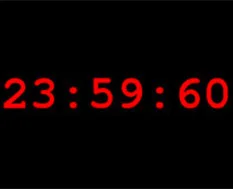
Une seconde de plus en 2005
Le 1er janvier 2006, à 1 heure du matin, il faudra retarder les montres d’une petite seconde. Très exceptionnellement, la minute entre minuit 59 minutes et...
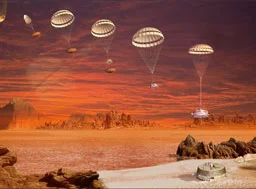
Titan, 10 mois après l’atterrissage réussi de la sonde Huygens
Le 30 novembre 2005, la revue Nature met en ligne un numéro spécial consacré aux résultats de la sonde européenne Huygens qui s’est posée sur Titan le 14...
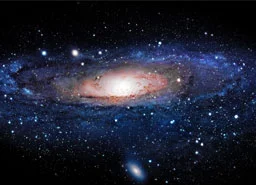
La plus grande concentration de matière à grande échelle de l’Univers proche
Depuis les années 80’s, nous savons que notre Galaxie, la Voie Lactée, et la trentaine de galaxies voisines qui forment avec elle le "Groupe Local" de...
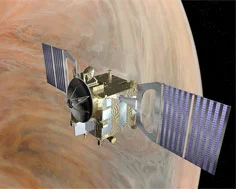
Lancement réussi de Venus Express le 9 Novembre 2005
Le 9 Novembre, la sonde Venus Express a été lancée par une fusée Soyouz depuis le pas de tir de Baïkonour au Kazakhstan. Cette mission de l’Agence Spatiale...
Une méthode numérique "multi-zoom" pour étudier la formation des galaxies
Lors de sa croissance, une galaxie absorbe la matière qui l’environne par attraction gravitationnelle. Ce processus peut se dérouler par à-coups...
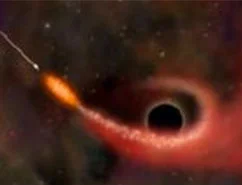
Un trou noir à la recherche d’un domicile
Cette technique extrêmement efficace et qui aurait permis dans tous les cas de détecter une galaxie normale autour de HE0405-2958 n’a révélé aucune trace de...
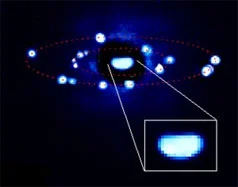
Les lunes de l’astéroïde 87 Sylvia : Rémus et Romulus
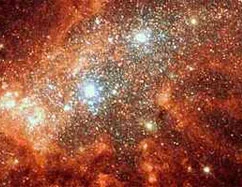
Un mécanisme d’émission dual au coeur de notre Galaxie ?
Grâce à de récentes observations du Centre Galactique en infrarouge thermique avec NACO au VLT, des astronomes du LESIA à l’Observatoire de Paris et de l’ESO...
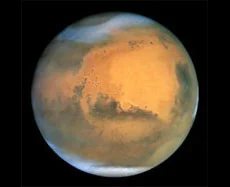
Première observation d’un météore sur Mars
Les comètes, en passant près du Soleil, éjectent un grand nombre de petites particules, qui se dispersent, mais continuent à voyager le long de l’orbite de...