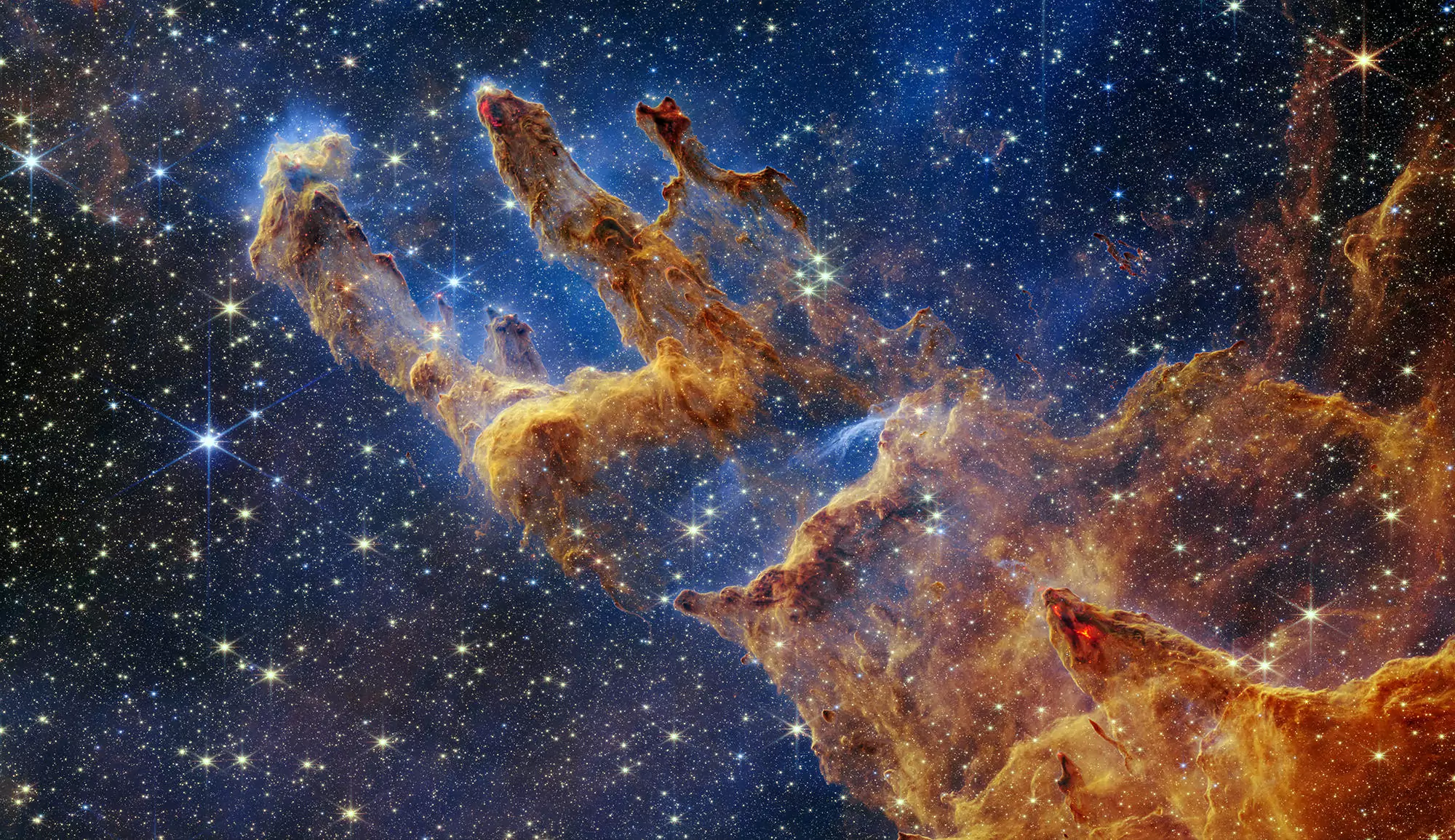
The majority of long-duration gamma-ray bursts (GRBs) originate from the collapse of massive stars. Their afterglows, although fading rapidly, can initially be extremely bright in optical and near-infrared wavelengths, making them detectable at large cosmological distances and making GRBs potentially powerful tools for probing the early ages of the Universe, the first galaxies, and the first stars.
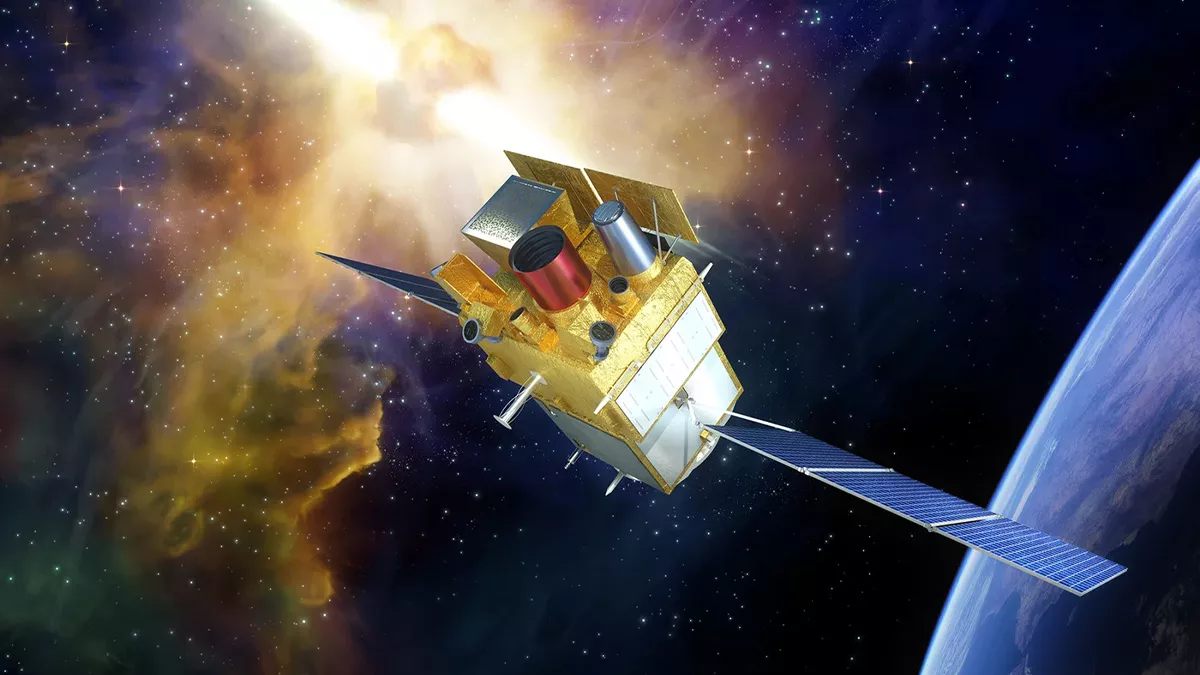
On March 14, 2025, the Chinese-French SVOM satellite discovered and observed GRB 250314A. The results of the space observations alerted researchers, and the ground-based follow-up campaign by the Stargate collaboration at ESO/VLT, co-led by Susanna Vergani (CNRS research director at LUX, Paris Observatory - PSL), established that the GRB had a very high redshift : z 7.3. This gamma-ray burst therefore exploded at the heart of the reionization era, when the Universe was only 730 million years old.
The discovery of the gamma-ray burst and its distance enabled JWST observations to be activated, leading to the detection of its host galaxy and the discovery of the supernova associated with the GRB.
The oldest supernova ever detected
This is the first supernova ever detected at such great distances, when the first generations of stars had just formed, confirming the association of GRBs with the collapse of massive stars.
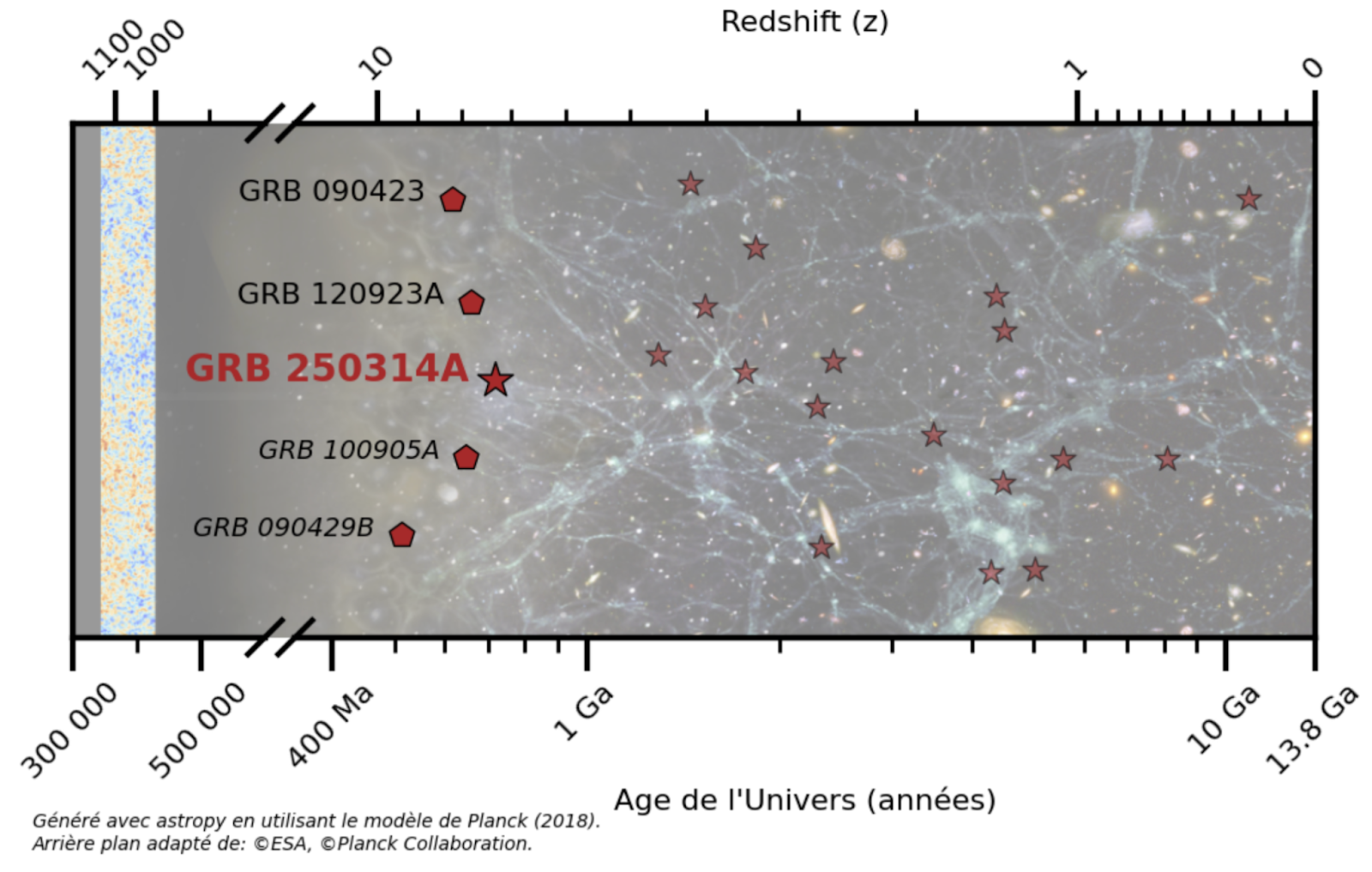
GRB 250314A is the third most distant gamma-ray burst whose distance has been determined by spectroscopy.
The previous one was observed more than 10 years ago ! SVOM detected the gamma-ray burst GRB 250314A only a few months after the start of its scientific operations, opening up very promising prospects for the study of very distant gamma-ray bursts and their use to explore the early ages of the Universe and the first stars.
Reference
This work is the subject of two articles published on December 9, 2025, in the journal Astronomy and Astrophysics :
“SVOM GRB 250314A at z ≃ 7.3 : an exploding star in the era of reionization”
“JWST reveals a supernova following a gamma-ray burst at z ≃ 7.3”