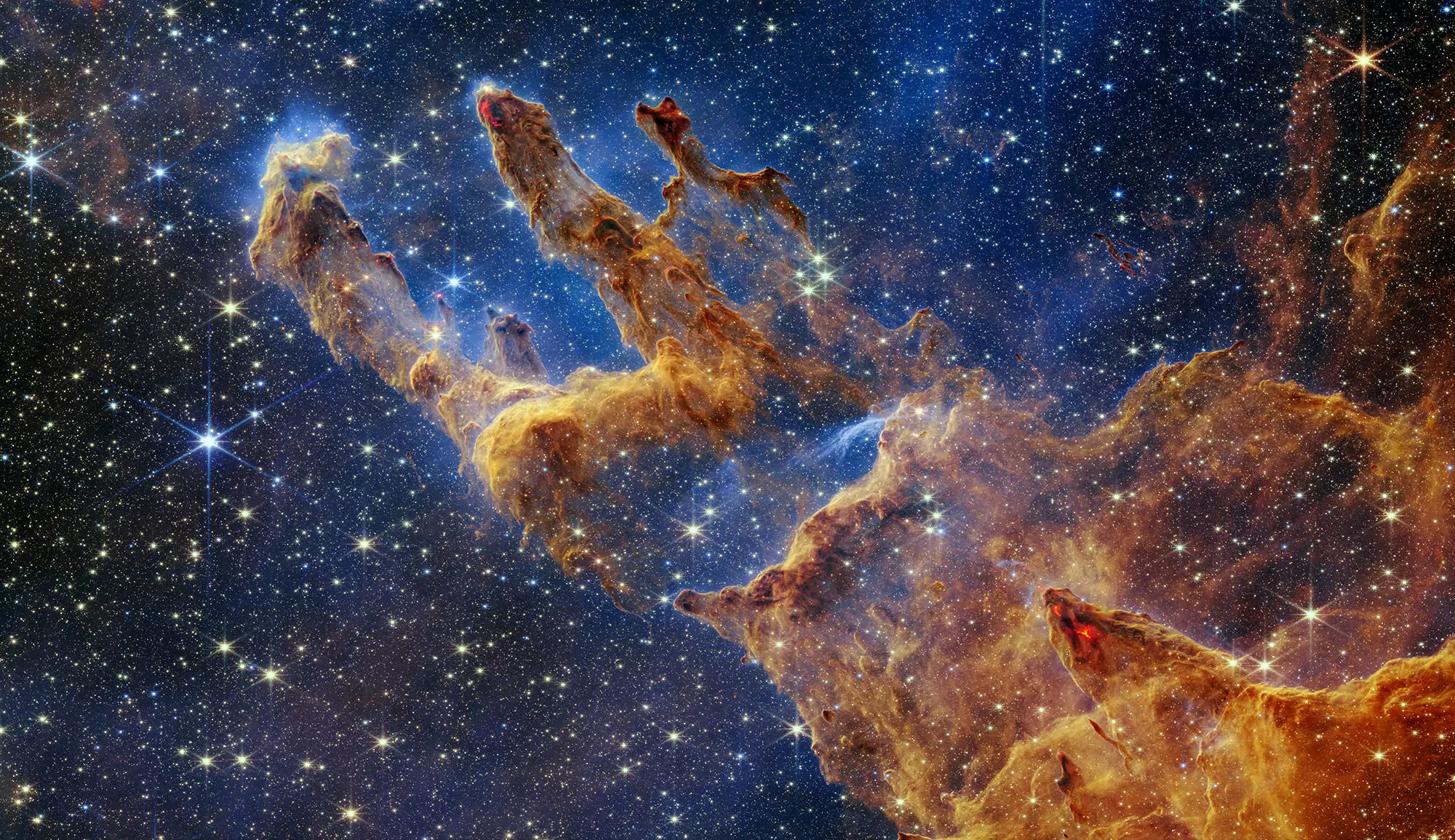
Euclid, a mission of the European Space Agency, aims to understand the accelerating expansion of the Universe and the nature of dark energy and dark matter.
On 12 November 2026, the Euclid scientific consortium and ESA will publish a large dataset, the Data Release 1 Foundation, a major step towards the mission’s first major data release (DR1, Data Release 1), scheduled for June 2027.
Covering 1,900 square degrees of the sky – approximately 14 per cent of the sky area to be observed during the mission’s six-year duration – this set of observations in visible and near-infrared light represents the largest sky map of its kind ever produced from space.
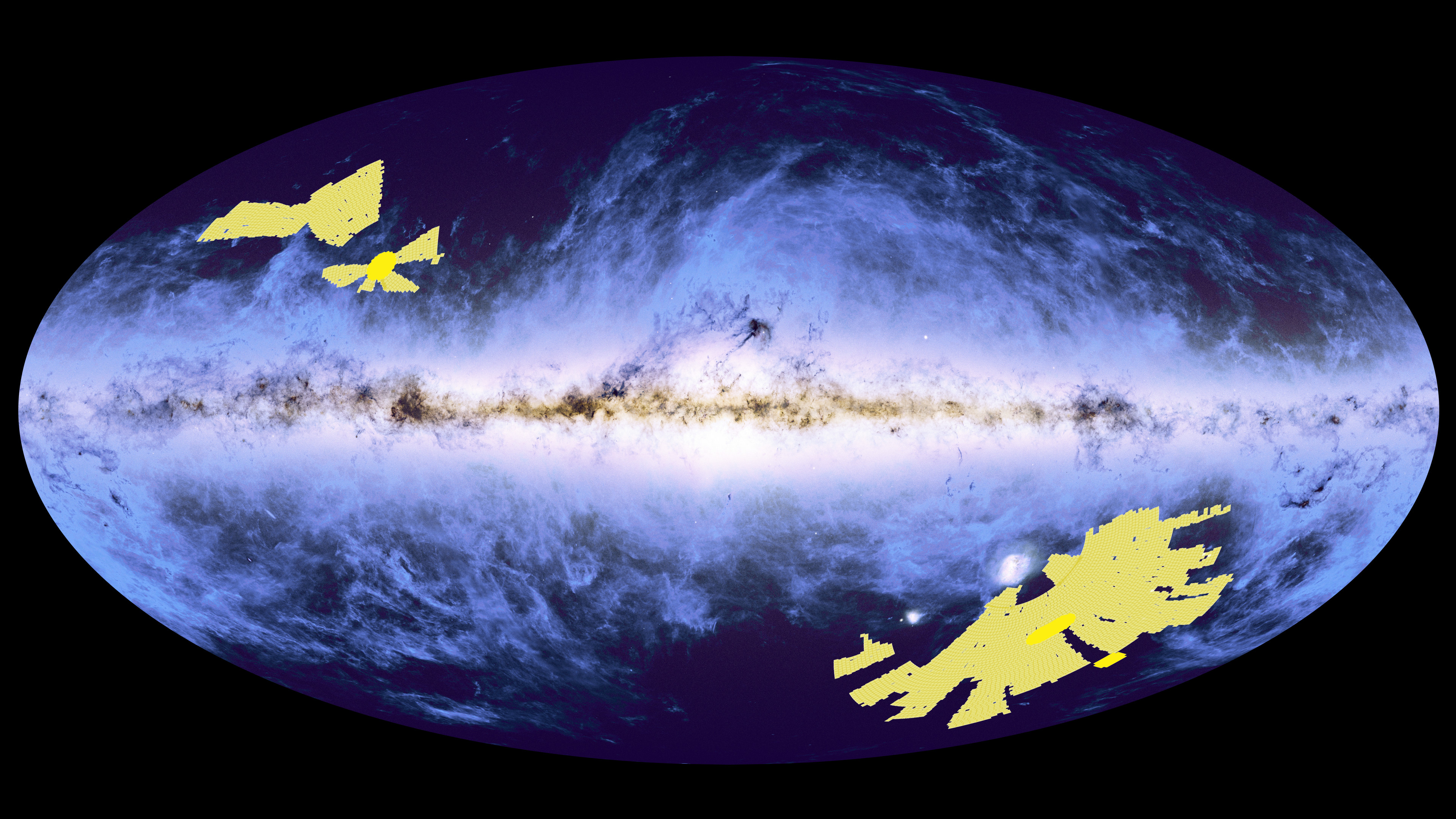
These data combine exceptionally sharp, wide-field images with millions of spectra.
The DR1 Foundation contains around 10,000 scientific images obtained by the two instruments on board the satellite – the VIS camera in the optical range and the NISP spectrophotometer in the near-infrared range – as well as catalogues describing the objects detected in these observations.
Since its launch in mid-2023, Euclid has catalogued more than 900 million galaxies. Several regions of the sky have been observed repeatedly over long periods : these are Euclid’s ‘deep fields’, which enable astronomers to study very distant galaxies as they were 10 billion years ago.
DR1 also includes over 160 million spectra, providing additional and crucial information about the observed objects, their nature and their distance.
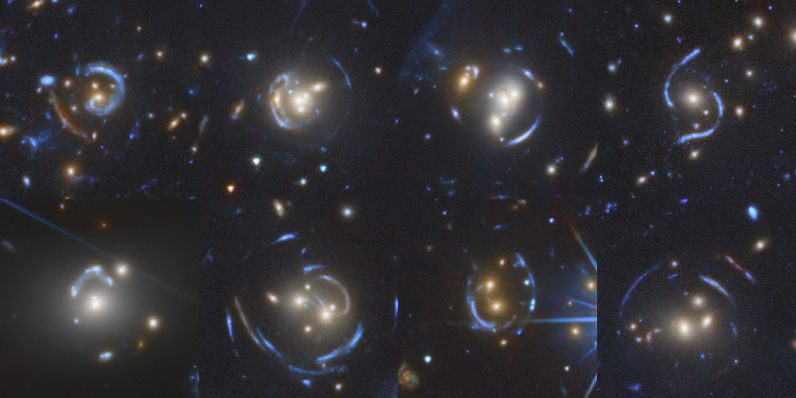
The data from the DR1 Foundation will serve as the basis for the full version, DR1, on which the mission’s first cosmological analyses will be based. It is already enabling researchers to explore, beyond cosmology, a wide range of astrophysical questions concerning galaxy clusters, large-scale structures in the Universe, dwarf galaxies, quasars, active galactic nuclei, and even transient phenomena.
The Euclid Consortium
The Euclid consortium comprises more than 2,000 scientists from 300 institutes across 15 European countries, the United States, Canada and Japan. It is responsible for the development of the scientific instruments and for the production and analysis of scientific data.
The teams at the Paris Observatory – PSL and the Euclid mission
The scientific interests of the teams at the Paris Observatory, in the LUX, LIRA and LTE laboratories, range from cosmology to the study of the Solar System, including galaxy clusters, galaxies and globular clusters. At LUX, scientists are using Euclid’s observations of the formation and evolution of cosmic structures to test the predictions of their models of dark energy and dark matter, which offer alternatives to the standard cosmological model. They are also interested in what Euclid can teach us about the nature of the proto-galaxy cluster candidates detected by Planck and their connection to the largest structures in the Universe. In the nearby Universe, one area of research is the detection of galaxies with very low surface brightness.
Long centred on the Milky Way and its neighbouring galaxies, the study of globular clusters is now extending to the extragalactic scale thanks to Euclid. At LIRA and LUX, researchers are analysing these observations, which could enable the detection of nearly half a million globular clusters in the galaxies of the local Universe, compared with a few tens of thousands in current catalogues.
Analysis of the images obtained by Euclid also reveals the presence of asteroids and comets in our solar system. The Time-Space Laboratory (LTE) at the Paris Observatory contributes to the data processing chain by providing
See also
On 9 October 2023, in Nice, Françoise Combes, an astrophysicist and specialist in galactic dynamics at the Paris Observatory – PSL, gave a lecture entitled : “The Euclid satellite and the dark side of the Universe”
Interview with Amandine Le Brun during the episode on France Culture of *La Science CQFD* with Hélène Courtois : *The Universe on a Map*, broadcast on 12 October 2023
On 9 January 2024, Amandine Le Brun, a CNRS research fellow at the Paris Observatory – PSL, in the LUTH laboratory, spoke as part of the IAP’s monthly series of public lectures, presenting “Galaxy clusters as cosmological probes and astrophysical laboratories”.
23 May 2024 ESA’s Euclid mission delivers its first scientific results