
On board ESA’s Mercury Planetary Orbiter (MPO), the SIMBIO-SYS instrument suite comprises three channels : STC, HRIC and VIHI, a visible and near-infrared spectro-imager.
All three were activated and tested whilst pointing towards the sky for the first time. The checks were carried out successfully and initial analysis confirms that the instrument is operating as intended.
This first light also enabled an initial observation of the sky : the STC channel, in particular, captured images of stars. Meanwhile, the VIHI channel, under the joint scientific leadership of Alain Doressoundiram, an astronomer at the Observatoire de Paris - PSL, at the Laboratory of Instrumentation and Research in Astrophysics, is also functioning correctly.
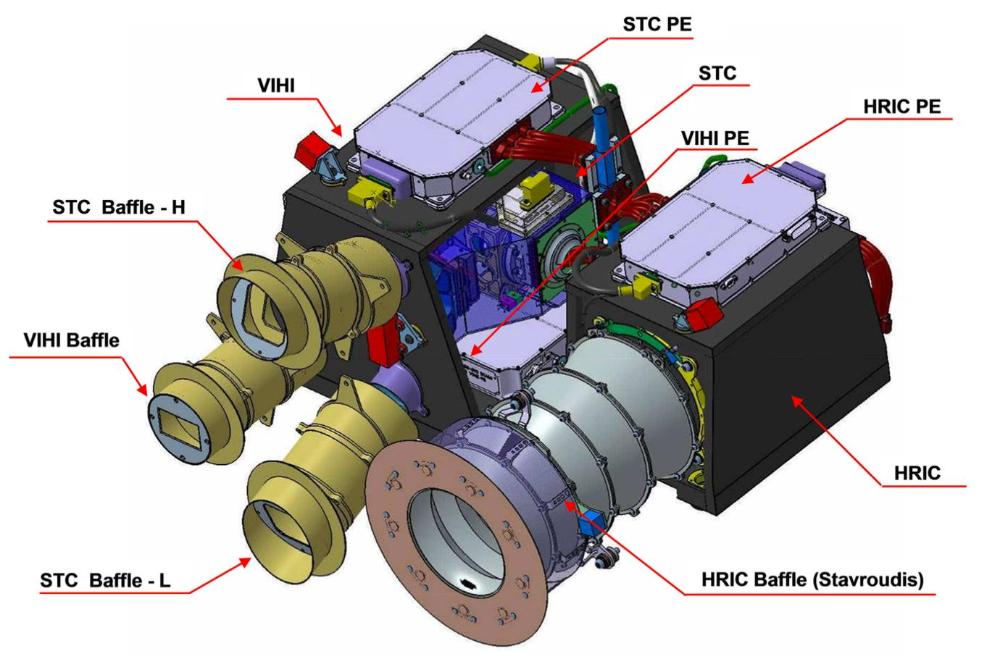
“This initial deployment of SIMBIO-SYS is a particularly encouraging milestone. The smooth operation of VIHI allows us to approach the preparations for scientific operations with confidence. In particular, this instrument will enable us to study the composition of Mercury’s surface in the visible and near-infrared spectrum. After eight years of travel, the scientific adventure is truly beginning,” emphasises Alain Doressoundiram.
The coming weeks will be devoted to finalising the settings for SIMBIO-SYS, ahead of the start of scientific observations of Mercury, scheduled for April 2027.