SOLAR SYSTEM
MARS
First detection of electrical discharges
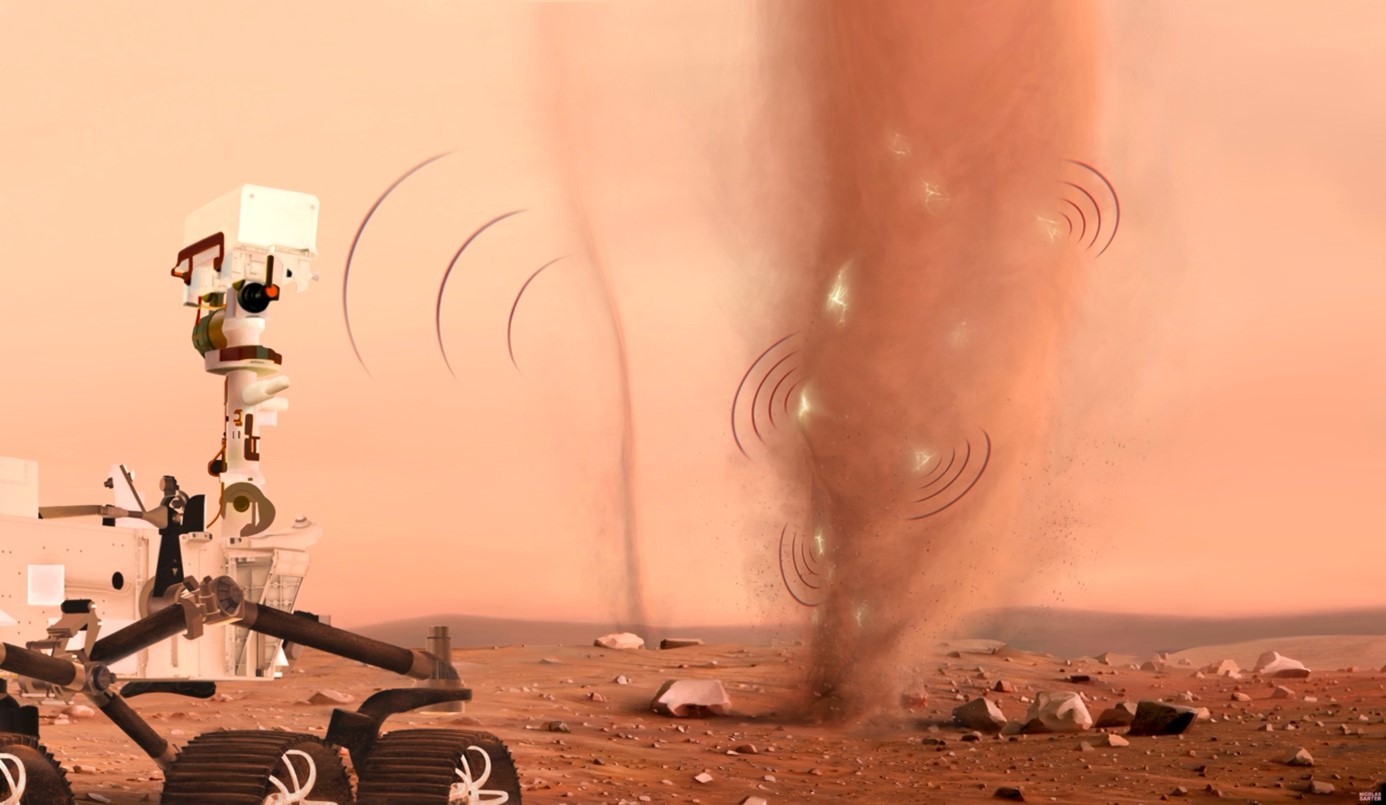
The microphone on the SuperCam instrument on the Perseverance rover has recorded real electrical discharges in dust devils for the first time. This confirms that the Martian atmosphere really does “crack,” with consequences for its chemistry, climate, and the preparation of future manned missions.
OCCULTATIONS
On October 14, Jupiter’s satellite Ganymede occults the star HIP 37442. Monitored through citizen science, the event should provide 100×more accurate astrometry to improve Ganymede’s ephemeris and aid navigation for ESA’s JUICE mission.
READ THE ARTICLE ➜
ASTEROIDS AND RINGS
A ring system forming around the centaur Chiron has been discovered, revealed by the observation of a stellar occultation : even “small” distant objects have fine structures that evolve over time.
READ THE ARTICLE ➜
ASTEROIDS AND PLANETARY DEFENSE
On October 14, Jupiter’s moon Ganymede will occult the star HIP 37442. Monitored through citizen science, the event should provide 100×more accurate astrometry to improve Ganymede’s ephemeris and aid navigation for ESA’s JUICE mission.
READ THE ARTICLE ➜
PRIMITIVE METEORITES
A new study explains why they are so rare on Earth
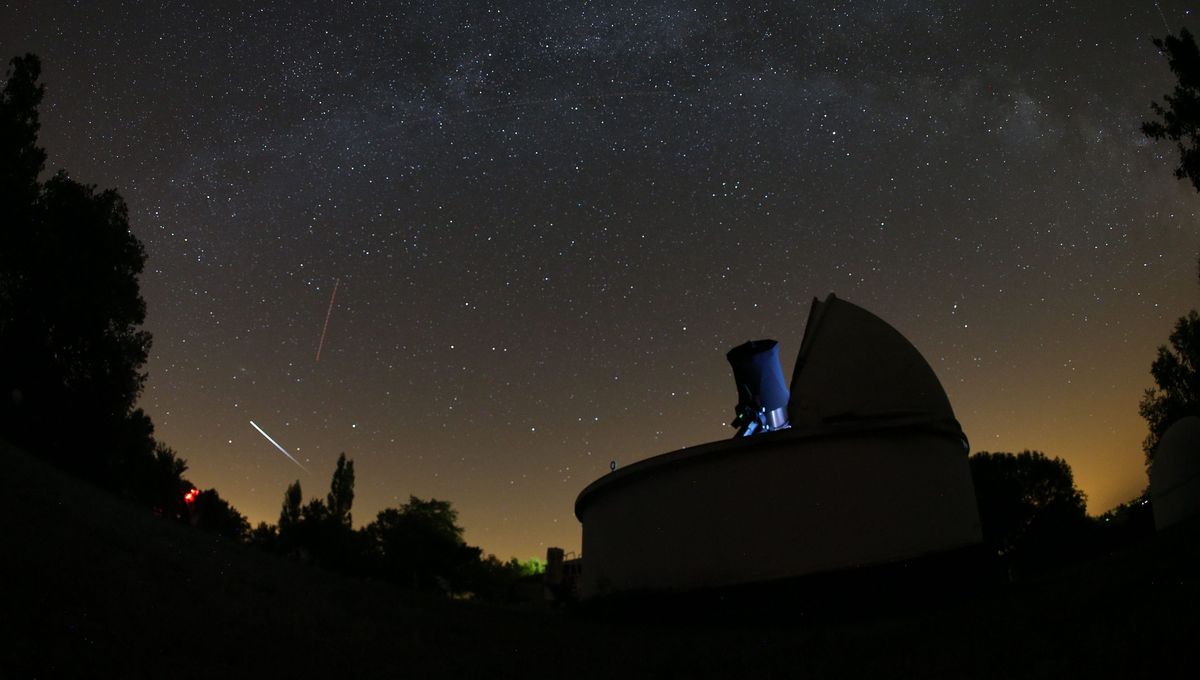
So-called “primitive” meteorites are fragments of asteroids that have retained the original composition of the cloud of gas and dust that formed the Solar System. A study shows why they so rarely reach the ground intact, even though they are common in asteroids sampled by probes. Their fragility and the way they disintegrate in the atmosphere largely explain this apparent contradiction.
READ THE ARTICLE ➜
WATER
An overview of “water in the Universe,” from Earth’s oceans to icy moons and debris disks.
READ THE ARTICLE ➜
PLUTO & CHARON
Thanks to James Webb and MIRI, the first observations of Pluto and Charon in the mid-infrared spectrum have been made : fog, climate, and surface features are being deciphered.
READ THE ARTICLE ➜
URANUS
Using auroras as a natural clock, teams are refining the internal rotation period of Uranus, which provides insight into the structure of its magnetic field.
READ THE ARTICLE ➜
EARTH
The history of Earth’s orbit told by sediments
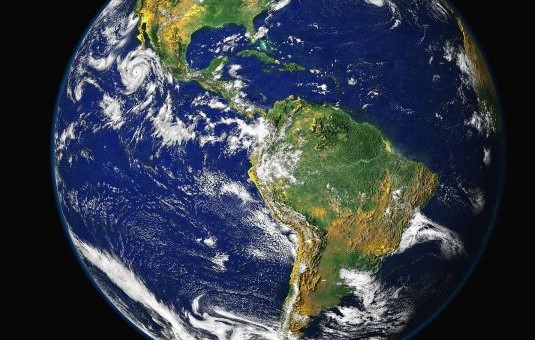
Earth’s orbital cycles modulate the solar energy received at its surface. These rhythms, linked to gravitational interactions with other planets, leave an imprint in sediments, like a fossil of the past climate. AstroGeoFit makes it possible to reconstruct the eccentricity of Earth’s orbit—a cornerstone of climate over millions of years—and to establish a complete time scale for the sediments analyzed.
STARS & EXOPLANETS
JWST
James Webb discovers its first exoplanet
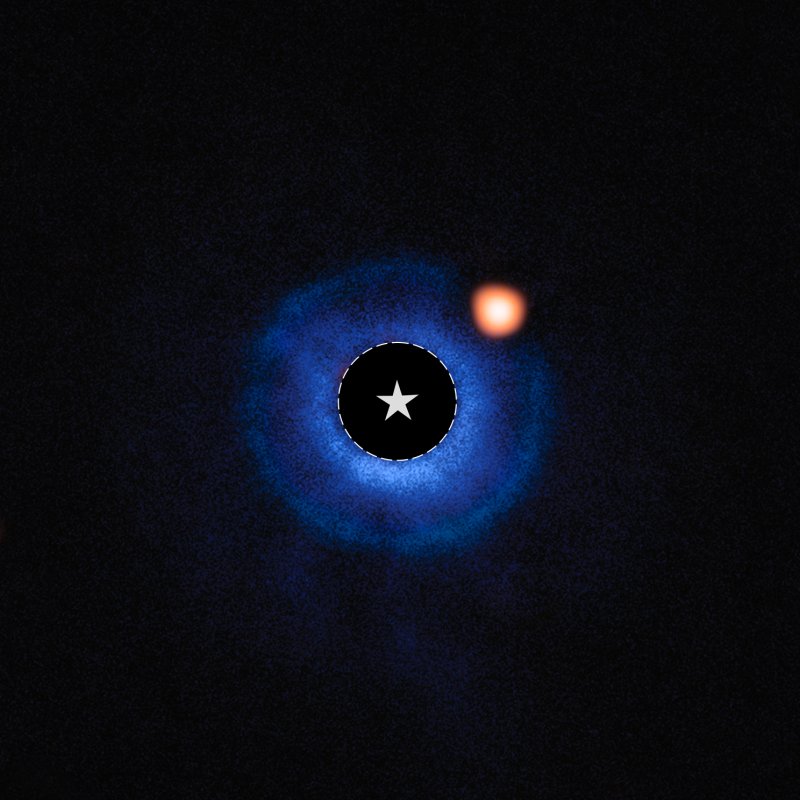
In 2025, the space telescope makes its first discovery of an exoplanet using direct imaging, thanks to the MIRI instrument and a coronagraph designed in part at the Observatory. For the first time, Webb does not just analyze the light from the star : it isolates the light from a planet, paving the way for detailed study of smaller, cooler worlds.
READ THE ARTICLE ➜
NEARBY PLANET
A campaign of observations is testing for the presence of a planet around the star closest to us, which resembles the Sun, using a combination of space and ground-based telescopes.
READ THE ARTICLE ➜
JETS AND WINDS IN DISKS
Observations of disks around young stars reveal jets, winds, and small “ripples” that shape the future orbits of forming planets.
READ THE ARTICLE ➜
EXOSOLAR WEATHER
First observation of a stellar storm
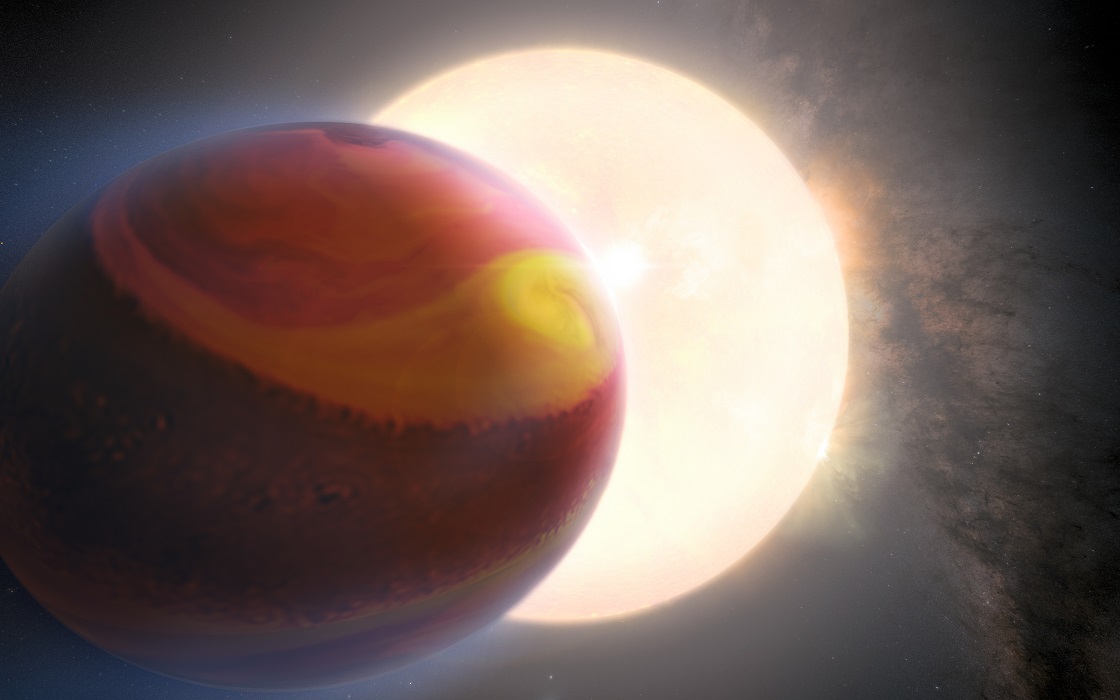
Thanks to the large LOFAR radio network, researchers have identified for the first time a true giant stellar storm on a nearby star : a coronal mass ejection, the equivalent of a huge solar flare but on a much more violent scale. This result shows that some stars can expose their planets to a bombardment of particles and radiation far more intense than what we experience around the Sun.
READ THE ARTICLE ➜
THE SMALLEST EXOPLANET
Thanks to pulsar timings at the Nançay decimeter radio telescope, a team has detected traces of an object with a mass smaller than that of the Moon, possibly the smallest exoplanet ever found. The signal has yet to be confirmed, but it opens a new window on planets around exotic systems.
READ THE ARTICLE ➜
EXOPLANET AROUND A BINARY STAR
At the end of the year, the first image of a planet so close to a double star system is announced, an extreme case for scenarios of formation and orbital stability.
READ THE ARTICLE ➜
THIRTY YEARS OF EXOPLANETARY EXPLORATION AT THE PARIS OBSERVATORY
The Paris Observatory is celebrating the 30th anniversary of the first discovery of an exoplanet.
AMMONIA
Observations made with the MIRI instrument operating in the mid-infrared on board the James Webb Space Telescope reveal the first direct detection of ammonia in the atmosphere of a planetary-mass companion.
READ THE ARTICLE ➜
| 7917 exoplanets as of January 1, 2026 |
Since the first exoplanet was discovered in 1995, the exoplanet.eu website, developed and constantly updated at the Observatory, has been the international reference for the catalog of discovered exoplanets. In 2025, it now features an educational portal to help users understand everything about these worlds.
EXTREME UNIVERSE
GAMMA-RAY BURST
A mysterious explosion never seen before
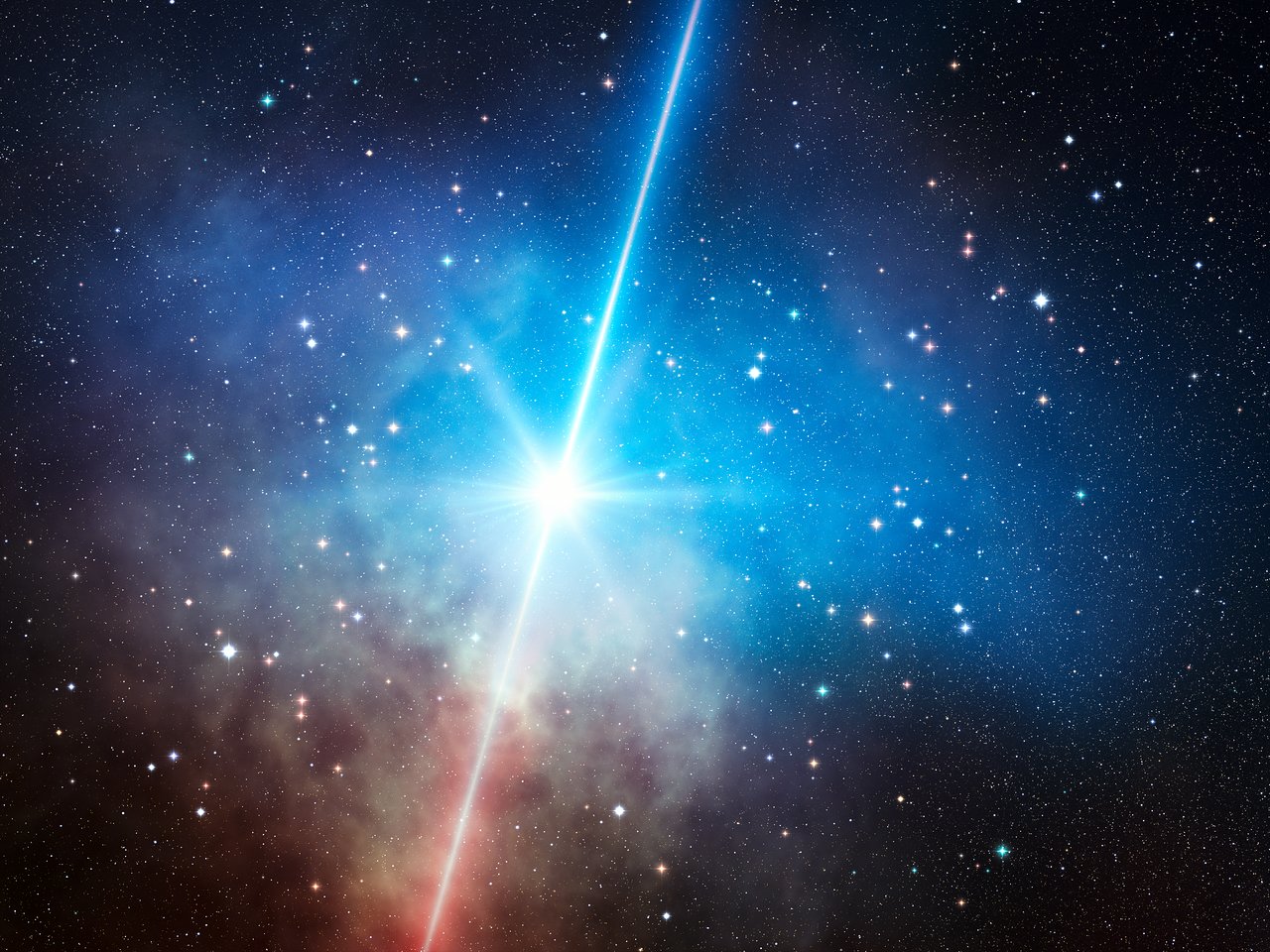
Gamma-ray bursts (GRBs) are the most powerful explosions in the Universe, usually caused by the explosive destruction of stars. Astronomers have detected a gamma-ray burst that has repeated several times in the course of a day, an unprecedented event. The source of this powerful radiation is discovered outside our galaxy, its location having been pinpointed by the VLT. But no known scenario can fully explain this new GRB, whose true nature remains a mystery.
READ THE ARTICLE ➜
FAST BURSTS
A fast radio burst (FRB) is a very brief flash of radio waves, lasting a few milliseconds, most often originating from distant galaxies. Ultrafast radio bursts observed with FAST make it possible to probe small magnetic arcs on an active red dwarf, which are impossible to image directly, while new mechanisms involving the production of coherent radio wave emissions are proposed to explain the origin of fast radio bursts.
READ THE ARTICLE ➜
SUPERNOVA
SVOM detects signal from oldest supernova dating back 13 billion years
The signal lasted only 10.24 seconds. A brief moment in March during which the instruments of the Franco-Chinese SVOM satellite recorded a gamma-ray burst. Additional observations quickly carried out with ground-based instruments (including ESO’s VLT) and then with the James Webb Space Telescope identified the host galaxy and revealed the associated supernova : GRB 250314A is associated with a supernova explosion that occurred about 13 billion years ago, at a time when the Universe was only about 730 million years old. This is a record distance for this type of phenomenon.
READ THE ARTICLE ➜
SIXTY YEARS OF THE NANÇAY LARGE RADIO TELESCOPE
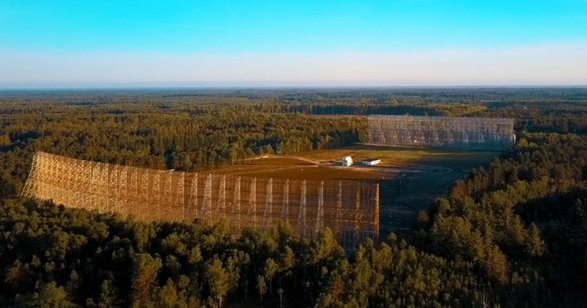
A look back at six decades of radio observations and the still major role this instrument plays in many current programs.
READ THE ARTICLE ➜
TRANSIENT SOURCES
They are called “transients” because they appear and disappear suddenly. By re-analyzing six years of archives from the MeerKAT radio telescope in South Africa using new cutting-edge methods, teams are uncovering transient sources that had escaped the original analyses.
READ THE ARTICLE ➜
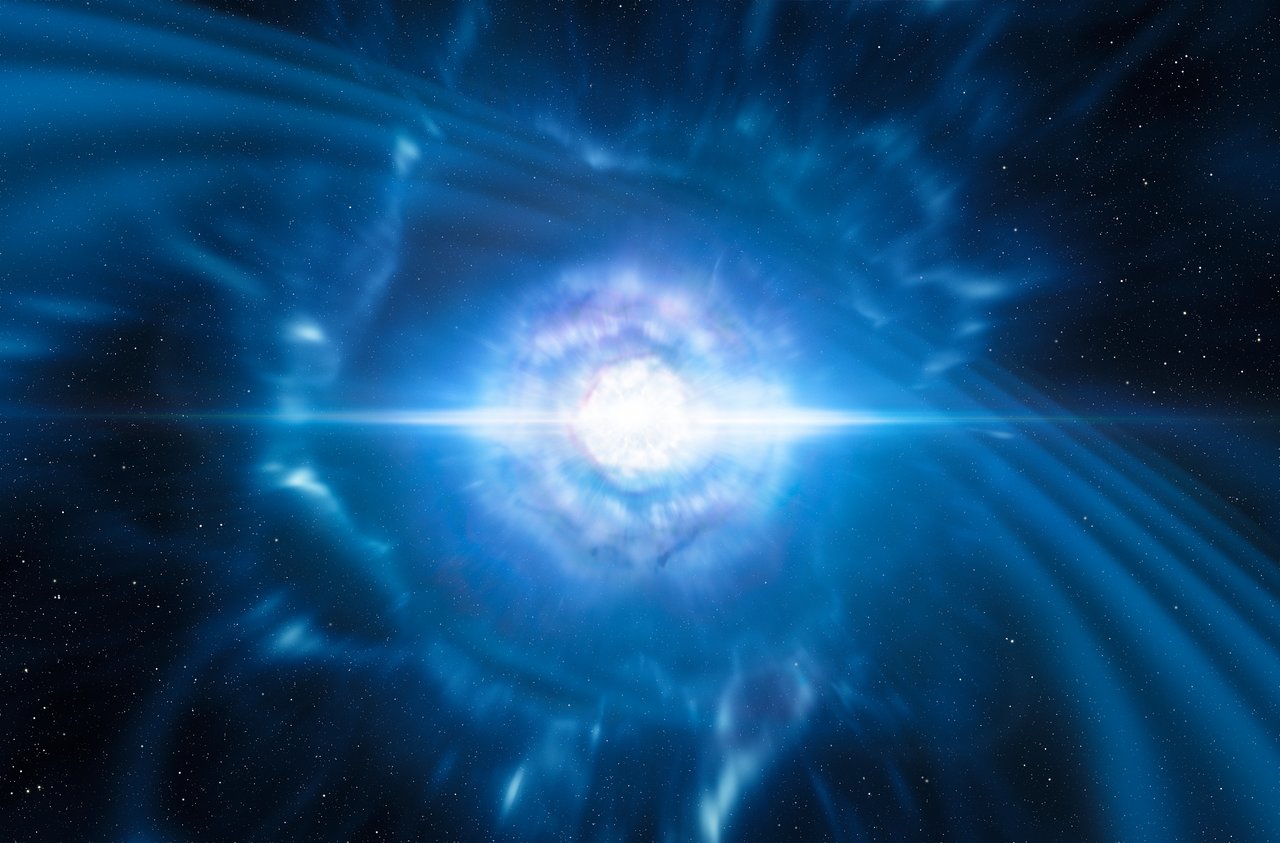
TEN YEARS OF GRAVITATIONAL WAVES
The Observatory is celebrating the 10th anniversary of the first detection of a gravitational wave and has published a special report.
READ THE ARTICLE ➜
CLASS X SOLAR FLARE
On November 10 and 11, the Sun produced extremely intense flares known as class X flares. One of these was accompanied by a relativistic particle event, which is extremely rare and occurs on average once or twice per solar cycle. The ORFEES spectrographs and the Nançay Decametric Network (NDA) observed numerous associated solar flares, which are tracers of the acceleration and injection of energetic solar particles.
READ THE ARTICLE ➜
GALAXIES, COSMOLOGY
DARK MATTER
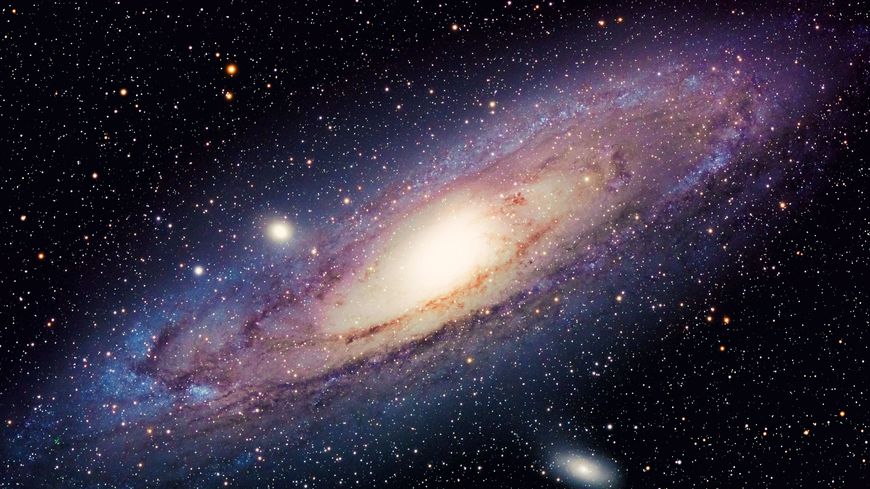
Downward revision of Andromeda’s mass
A study has significantly revised downward the total mass of the Andromeda galaxy, our neighbor, showing a deficit of dark matter compared to conventional expectations. This result, obtained using a highly sophisticated dynamic model, raises direct questions about cosmological scenarios.
READ THE ARTICLE ➜
CLASSIFICATION OF GLOBULAR CLUSTERS
Globular clusters are among the oldest inhabitants of our Galaxy. These dense spheres, containing hundreds of thousands of stars held together by gravitational force, formed either within or outside our galaxy. A team is refining their classification and highlighting the role of galactic mergers in the formation of the Milky Way.
READ THE ARTICLE ➜
ORIGIN OF GLOBULAR CLUSTERS
A study of Gaia space data coupled with data from the APOGEE instrument in Texas suggests that the Omega Centauri cluster is the remnant of an ancient galaxy swallowed up by the Milky Way, named Nephele, which may have brought with it several other associated globular clusters.
READ THE ARTICLE ➜
EUCLID
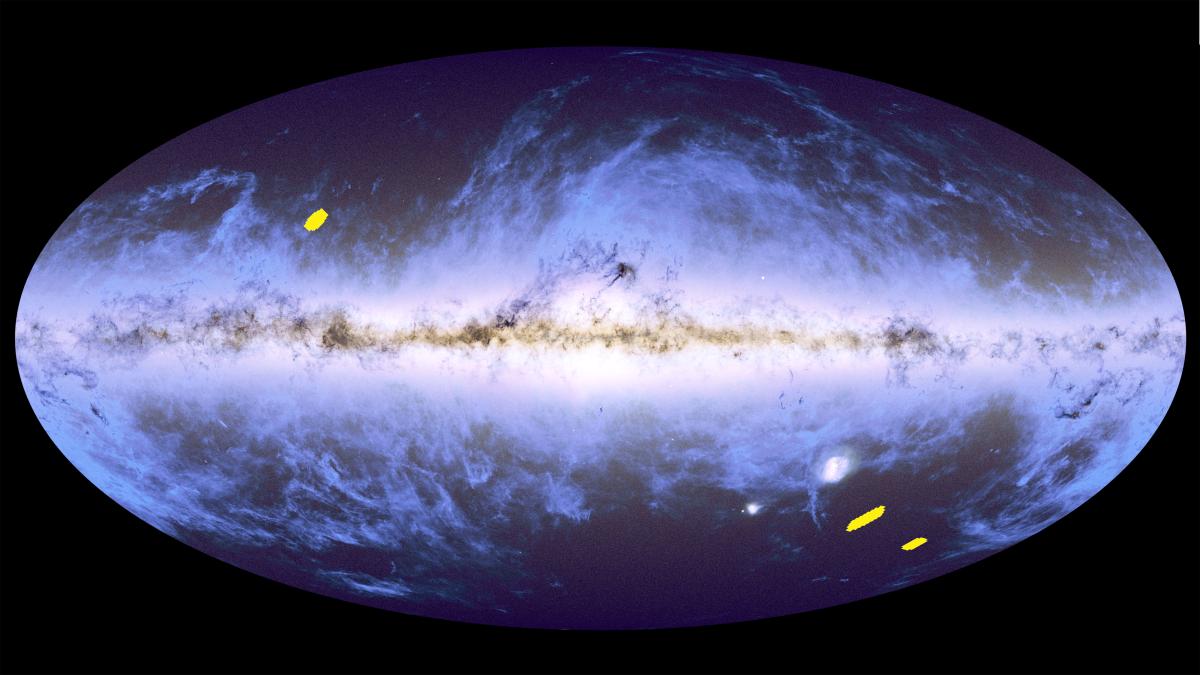
First dataset
ESA’s Euclid mission is a space exploration mission designed to study the origin of the acceleration of the expansion of the Universe and the nature of dark energy, dark matter, and gravity. The first catalog will be published in March.
READ THE ARTICLE ➜
INSTRUMENTS, INFRASTRUCTURE, SPACE
ATOMIC CLOCKS
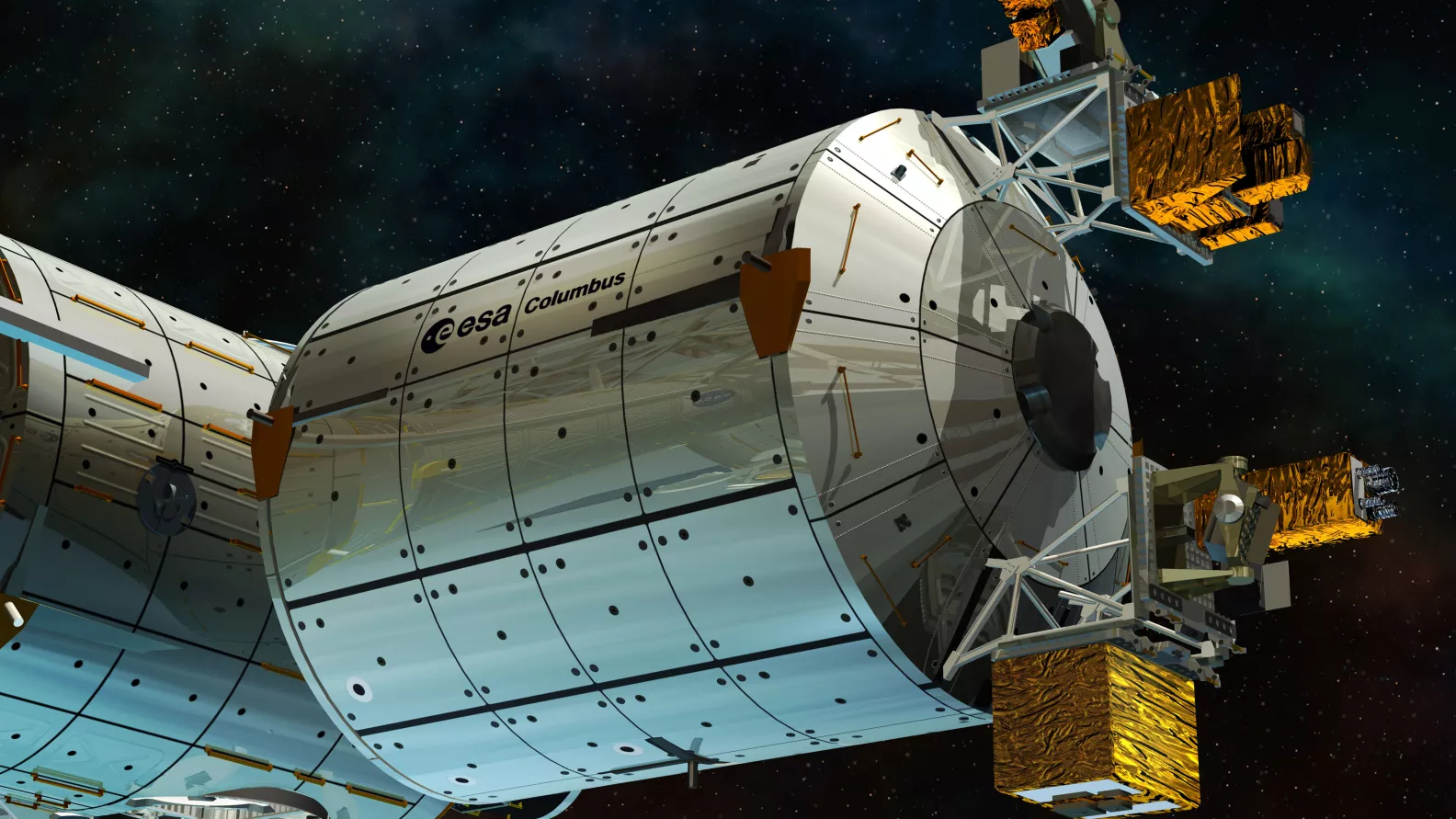
Launch of PHARAO
In April 2025, PHARAO was installed on the Columbus module of the International Space Station. It became the first cooled cesium atomic clock deployed in Earth orbit and integrated into a time comparison network. The free-falling atoms make it possible to test general relativity with unprecedented precision, validate new space technologies, and contribute to the improvement of global time scales.
READ THE ARTICLE ➜
MOONS
After more than ten years of development, the giant MOONS spectrograph is leaving Europe to be installed on the Very Large Telescope in Chile, where it will be able to observe thousands of objects in a single data acquisition.
READ THE ARTICLE ➜
CTAO
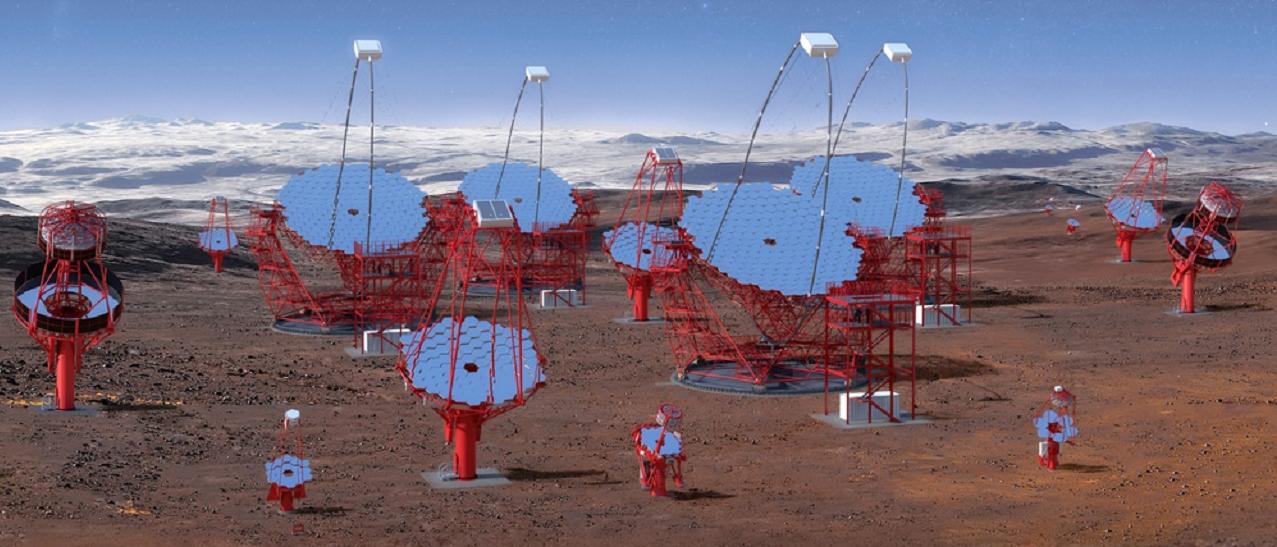
The CTAO gamma-ray observatory is becoming a European research infrastructure, and construction of 12 telescopes is beginning with significant participation from the Paris Observatory.
READ THE ARTICLE ➜
MOSAIC
Construction confirmed, eco-design and AI
The ESO has confirmed the construction of MOSAIC, the multi-object instrument for the future ELT in Chile, to which the Paris Observatory is contributing in terms of design and scientific management, incorporating an eco-design approach aimed at integrating and assessing the environmental footprint of all phases of the instrument’s construction.
Phase B1 has reached a key milestone with the validation of the system architecture. The consortium has structured and disseminated nearly 8,000 requirements. A notable achievement is the unprecedented integration of AI tools, which has enabled the automation of tasks.
READ THE ARTICLE ➜
OPTICAL CLOCKS
Ten optical clocks in six countries are being compared simultaneously via fiber optics and satellite links. This is a step towards the creation of future time scales based on optical clocks, opening up new perspectives in astronomy, geodesy, and time-frequency metrology.
READ THE ARTICLE ➜
ADAPTIVE OPTICS
Four artificial laser stars in the Chilean sky
In November, four lasers fired from each of the four large 8-meter telescopes at the European Southern Observatory (ESO) were used to create artificial stars. These are used by the telescopes’ adaptive optics system to measure and correct for blurring caused by the Earth’s atmosphere. The spectacular firing of these lasers marks a major milestone in the GRAVITY+ project, in which the Paris Observatory is heavily involved.
READ THE ARTICLE ➜
GRAVIMETERS
The Horizon Europe EQUIP-G project, coordinated by the Observatory, has been launched with 20 partners from 11 countries. It is preparing a European network of quantum gravimeters to image the Earth’s interior in greater detail by measuring variations in gravity at different altitudes.
READ THE ARTICLE ➜
SENTINEL-6B
Launched on November 17, the Sentinel-6B satellite monitors sea level rise while measuring atmospheric temperature, both of which are key indicators of climate change. The Observatory is participating in this project by processing observations using space geodesy techniques.
READ THE ARTICLE ➜
END OF GAIA SATELLITE OBSERVATIONS
In 11 years, Gaia has collected a colossal amount of data, which has already led to the publication of several catalogs. Gaia will have completed its scan of 15,300 large circles of the celestial sphere and observed approximately two billion objects. To date, more than 13,000 publications detailing the scientific results of the mission have been recorded, a record number.